Candlelight and Carols: Shooting Christmas Eve Chapel Services
A seasonal guide to photographing candlelit Christmas Eve chapel services: exposure settings for flame light, the moments worth waiting for, and etiquette that keeps you welcome.
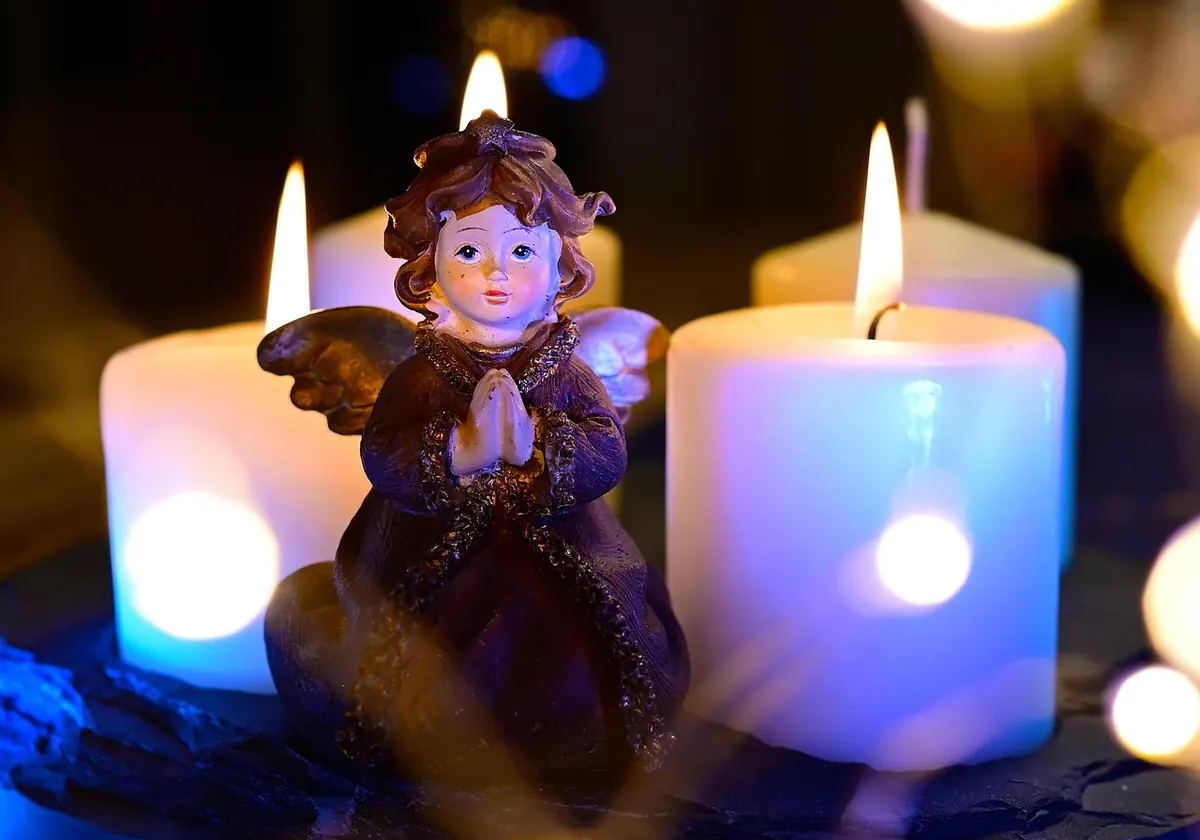
The first flame goes down the row and the whole chapel changes. Faces that were dark a second ago pick up a warm rim of light, the windows turn to black glass, and everyone starts singing a carol they only half remember. If you have ever tried to photograph that moment, you know the problem: your camera wants to make it bright, clean and even, and the room is none of those things.
Christmas Eve is the richest night of the year for chapel photography, and also the easiest night to become a nuisance. What follows is a working method — exposure, timing, position, manners — for anyone with a camera and a seat in the pews.
What Candlelight Actually Does to a Camera
A candle is a tiny, ferociously bright source sitting in a very dark room. Your meter will average the two, brighten the shadows, and blow the flame into a white blob. So stop metering for the room and meter for the highlights instead.
In practice that means dialling in negative exposure compensation, usually somewhere between one and two stops, and accepting that the stone walls will stay dark. That darkness is the picture. A frame where you can see every detail of the masonry is a frame where the candles look like nothing at all.
Set the camera to RAW, an aperture of f/1.8 to f/2.8, and an ISO you trust — many modern bodies handle 3200 comfortably, older ones start to mush at 1600. For shutter speed, think about what is moving. A congregation singing a familiar carol holds fairly still at 1/60; the moment a candle is passed hand to hand needs 1/125 or faster if you want the fingers sharp. For a wide, empty interior with no people in it, drop to 1/15 and brace against a pew.
White balance is where the mood lives. Candlelight sits warm on the scale, but most chapels now mix it with tungsten sconces, cheap LED strips or a blue-ish window. Set somewhere around 2800 to 3400K and check the back of the screen rather than trusting a preset. If your camera has an electronic shutter, test it before the service: under some LED and fluorescent fittings it produces banding across the frame. A quiet mechanical shutter is often safer.
A Kit That Fits in a Coat Pocket
Chapels are small. There is rarely room for a bag, let alone a light stand. Travel light and you will move less, which is the whole point.
- One fast prime. A 35mm or 50mm at f/1.8 covers almost everything in a building this size. Wide lenses let in less light and pull in more of the ceiling than you want.
- A body that shrugs at high ISO. Noise you can manage; motion blur you cannot.
- Two batteries, kept in an inside pocket. Cold drains them faster than you expect.
- A microfibre cloth. Candle smoke, breath and drizzle all end up on the front element.
- A small monopod, only if you have asked. Never a tripod across an aisle.
- Nothing that flashes or beeps. Turn off the flash, the focus assist beam and the shutter sound now, not in the dark.
The Timeline of a Christmas Eve Service
Arrive forty minutes early if you can. You get the empty chapel, wreaths and hymn board still tidy, and often a deep blue dusk through the windows that disappears entirely once the service starts.
Then the sequence runs roughly like this. The procession, lit by one carried candle, is brief and hard to catch — shoot it from your seat rather than turning to follow. The spreading of the flame is the shot of the night: one candle lighting a neighbour, then a whole row, then the nave. Get your exposure set before it begins, because it takes about ninety seconds.
After that, most services settle. Carols, readings, maybe a short address. Save your frames. When the congregation stands to sing the final verse with candles raised, you will want the camera already in your hands.
Skip the communion and the prayers entirely — not just for etiquette, but because those are the moments where a shutter is most conspicuous and the light is least useful.
Etiquette for a Visitor with a Camera
Many chapels welcome photographers and some quietly do not. Find out which you are in before you raise the lens.
- Ask first. Speak to the minister, churchwarden or steward a week or two ahead. Say what you will photograph, where you will sit, and offer to send the images afterwards. That offer has kept more doors open than any lens.
- Sit at the aisle end, near the back. You get a clean sightline without ever standing up.
- Never use flash. It destroys the atmosphere, startles people mid-prayer and is banned in most historic buildings.
- Silence everything. Autofocus beep, fake shutter sound on a phone, message notifications.
- Stay out of the aisle and never block someone's view of the altar or the choir.
- Respect the quiet. No shooting during prayers, communion or the hush that follows the last candle being lit.
- Be careful with children. Ask a parent first, every time.
- Stay for the whole service. Photographers who leave at the sermon are noticed.
Composition in a Very Small, Very Dark Room
Chapels reward symmetry. Stand at the back of the nave, centre yourself on the altar, and let the pews do the work of leading the eye. Expose for the flames and the congregation becomes a field of small silhouettes holding small fires — a picture no flash could ever make.
Move your attention closer when the wide shot is done. A single flame cupped in two hands. Wax pooled on a hymn book. A child's candle held slightly too high. The faces nearest you catch more light than the faces across the room, so work sideways along your own pew rather than reaching for the far end of the chapel.
Editing Without Killing the Mood
Open the RAW file and set white balance by eye, warmer than feels correct on a calibrated screen. Pull the highlights down around the flames rather than lifting the shadows. Leave the corners dark. Apply noise reduction gently — heavy settings turn candlelight into plastic. The version that looks like a room at midnight is almost always better than the version that looks like a room at noon.
Do a Rehearsal Run First
Sometime in mid-December, go to an ordinary weekday evensong in the same chapel, sit near the back, and take twenty frames. You will learn which pew gives a clean line past the pillar, how the sconces fall on the stone, and how loud your shutter really is. Then on Christmas Eve, put the camera on your lap, sing the carols, and lift it only for the three or four moments that matter. You will come home with fewer files and better pictures — and a standing invitation to come back.
Photo: drehkopp / Pixabay